


Knife/ladle for tomatoes Stalgast 332991 for cutting out pulp from fruits and tomatoes . Specificat..
1.60 €

Kitchen knife 25 cm forged Stalgast 218259 is made of forged steel rod. The handle is selected to p..
9.86 €

The 10 cm forged cleaning knife Stalgast 214109 is made of a forged steel rod. The handle is select..
4.23 €
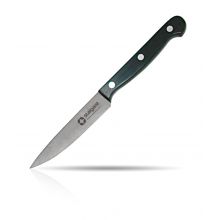
The 10 cm Stalgast 214108 peeling knife is made from a forged steel rod. The handle is selected to ..
2.52 €

The bone separating knife is narrow, 15 cm, forged Stalgast 209159, made of forged steel rod. The h..
5.92 €
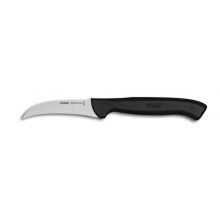
Vegetable peeler 7.5 cm with plastic handle ECCO Pirge series 38044 A vegetable shop cannot do with..
3.33 €

Vegetable peeler 12 cm with plastic handle ECCO Pirge series 38042 The color of the pen is yellow, ..
4.06 €

Discover the true pleasure of cutting, peeling vegetables with vegetable knives from the Turkish man..
2.07 €

Sushi knife 23 cm wooden handle Titan Pirge series. Special blade shape for convenient sushi prepar..
18.11 €
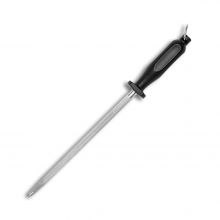
Musat 25 cm Pirge 81071 series MASAT allows you to return your knives to their former sharpness. It ..
14.48 €

With our 45 cm Shawarma Knife with Non-Slip Handle, DUO Pirge Series 34110 , you will turn the prepa..
28.50 €

Santoku chef's knife 18 cm with wooden handle Titan Pirge series 12105 - a small chef's kni..
16.35 €
Professional knives: what professional kitchen knives can you buy on our website?
There are many factors involved in choosing professional cutlery for a commercial kitchen. Do you know what professional knives are essential for each cutting task? Are you familiar with the types of blades? How do knife handles affect a chef's hands over time? This guide is all you need to know to choose and buy kitchen knives in Ukraine through our website "European Technologies and Equipment", which has already been discovered by hundreds of Ukrainians for its affordability, wide selection of knives and time-tested characteristics.
 Professional kitchen knife for the chef. Available in lengths from 18 to 25 cm, it has more uses than any other knife in the kitchen. The blade is wide at the handle and tapers to a point. When used properly, the chef places the tip of the knife on the cutting board behind the food to be chopped and, without lifting the tip, uses a rocking motion to cut evenly and quickly.
Professional Kitchen Paring Knives. There are four types of paring knives most commonly used: curved, spear-shaped, point, and clip-point. Delicate pepper rings, finely chopped olives, or cherries can be made with a curved or point paring knife to dress up fancy salads. A culinary knife or point knife can be used to remove corn from the cob, peel fruits or vegetables, slice beans, etc.; a clip-point is used to spear, seed, peel, and pit potatoes.
Professional boning knife. Blade lengths vary from 10 to 20 cm. Many chefs simplify the cutting process and get an extra portion by separating the roast when it is partially cooked. For roast beef, whole hams, lamb legs, veal feet and fish fillets, Kharkov recommends buying a knife with a narrow flexible blade; a wider rigid blade is used for cutting raw meat and many other trimming operations on thinner cuts of meat.
Butcher Knife & Cleaver. For odd jobs in the kitchen, butcher knives can be used to slice cured pork, cube chilled meat, slice steaks or cut raw meat. Many cooks substitute their favorite forged knife for jobs normally done by these knives. The cleaver is used to open lobsters, fillet poultry and remove joints.
Bread knives are professional kitchen knives. Don't underestimate how important and useful bread knives are! The serrated edges are perfect for cutting through thick crusts without tearing the bread underneath. Bread knives and other serrated blades are also useful for cutting fruits and vegetables with skins that bruise easily.
You can also always buy a professional kitchen utility knife – a sharp six-inch knife that is most effective for cutting soft fruits and vegetables. For sour fruits, a stainless steel blade is preferable. Useful for cutting large rings of melon, preparing cabbage for shredding, halving grapefruit and oranges, etc.